When I began testing AI for financial planning, I thought it would only help with numbers — but it ended up reshaping how I make decisions.
In 2025, productivity isn’t about doing more — it’s about doing what matters.
The explosion of AI tools over the past few years has completely changed how we work.
From startups to solo entrepreneurs, teams everywhere are discovering that automation doesn’t replace human creativity — it amplifies it.
Whether you’re managing content, analyzing data, or automating workflows, the most successful people this year aren’t working harder.
They’re using AI to think clearer, act faster, and focus smarter.
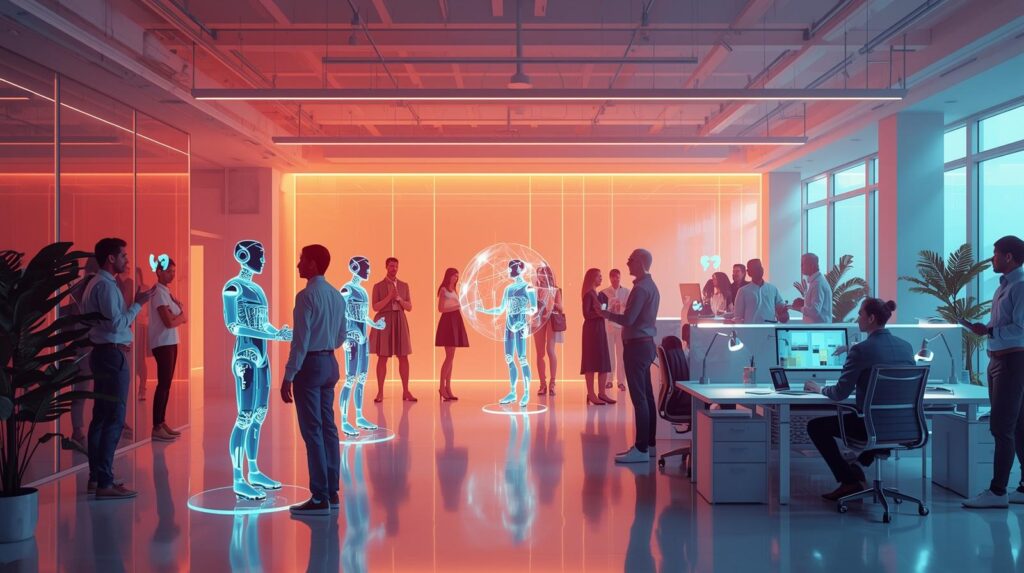
1. The Rise of the Intelligent Workspace
Workspaces are no longer static dashboards — they’re thinking systems.
Tools like Notion AI, ClickUp, and Airtable AI don’t just store information; they interpret it.
They summarize meetings, build schedules, and even make recommendations based on your work patterns.
Imagine logging in on Monday and your AI assistant already highlights the three tasks that will bring the biggest impact.
That’s not science fiction anymore — that’s how modern teams are working today.
2. From Automation to Augmentation
AI used to be about replacing repetitive work.
Now, it’s about augmenting creativity and decision-making.
Platforms like Jasper, Frase.io, and Runway AI let people focus on storytelling and design, while algorithms handle optimization, formatting, and distribution.
The best results happen when humans and AI work together —
humans bring intuition and emotion, AI brings precision and scale.
The future of productivity is built on that partnership.
3. Data That Thinks for You
We’re moving from data tracking to data interpretation.
Tableau AI, Google Analytics 5, and Power BI Copilot now use predictive models to show you not just what happened — but what’s about to happen.
These insights let small businesses make enterprise-level decisions with confidence.
When your analytics tool tells you why your sales dropped and what to do next, you’ve officially stepped into the era of intelligent productivity.
4. Collaboration Without Friction
The hybrid workplace created new challenges — coordination, communication, and alignment.
But tools like Asana Intelligence, Monday.com AI, and FeedHive are solving those problems by removing the noise.
They automatically assign tasks, summarize conversations, and highlight next steps.
AI workflow tools don’t replace leadership — they empower it.
Teams stay aligned, projects stay visible, and work finally flows without chaos.
5. Creativity at the Speed of Thought
AI isn’t just a productivity booster — it’s a creative partner.
Designers use Canva Magic Studio to turn text into visuals.
Video editors rely on Runway and Pika Labs to create cinematic scenes instantly.
Writers collaborate with ChatGPT and Claude AI to refine ideas faster than ever before.
In the near future, we’ll look back and wonder how we ever brainstormed without these tools.
Why It Matters
AI is leveling the playing field.
It allows individuals and small teams to operate at the same scale as large corporations.
More importantly, it’s shifting how we define “work.”
Productivity isn’t about filling hours — it’s about achieving meaningful outcomes with clarity and creativity.
People who learn to delegate to AI — not depend on it — will dominate the next decade.
Because real power doesn’t come from doing everything; it comes from knowing what not to do.
Final Thoughts
2025 marks the beginning of a new era — one where automation meets imagination.
AI has become our co-worker, our strategist, and sometimes even our silent partner.
But the most powerful tool of all remains human curiosity.
The future of AI productivity isn’t about replacing people; it’s about freeing them to think, create, and lead.
Those who embrace it today will shape the future of work tomorrow.
So don’t fear automation — design with it, grow with it, and let it amplify what makes you human.